Thika-Penuel Transforming
About Thika-Penuel’s Feeding Program
The feeding program began in 2015 when we as a group of local pastors saw the growing need among children living in the Kiandutu slums. Children were not attending school because of hunger, and they were so desperate they were stealing from local markets. 70% unemployment rates deeply affects their families. We began by feeding 40 children on Saturdays. Over the next few years, the number of children coming grew beyond our capacity.
In 2018, KCEF partnered with us to support our feeding program. When COVID-19 arrived in 2020, the need for food assistance increased dramatically. Many parents lost jobs and income due to government restrictions, and families were struggling to meet even their most basic needs. We also continue to see many single mothers raising families on their own while relying on occasional casual labor that may provide only a few dollars a day. When KCEF saw the growing need, they added a second feeding day on Wednesdays and, later, a third feeding day on Mondays.
Today, we feed nearly 750 children on Mondays and Wednesdays and 1,000 children on Saturdays. In total, we provide nearly 2,500 meals each week and more than 125,000 meals each year. The impact goes far beyond food.
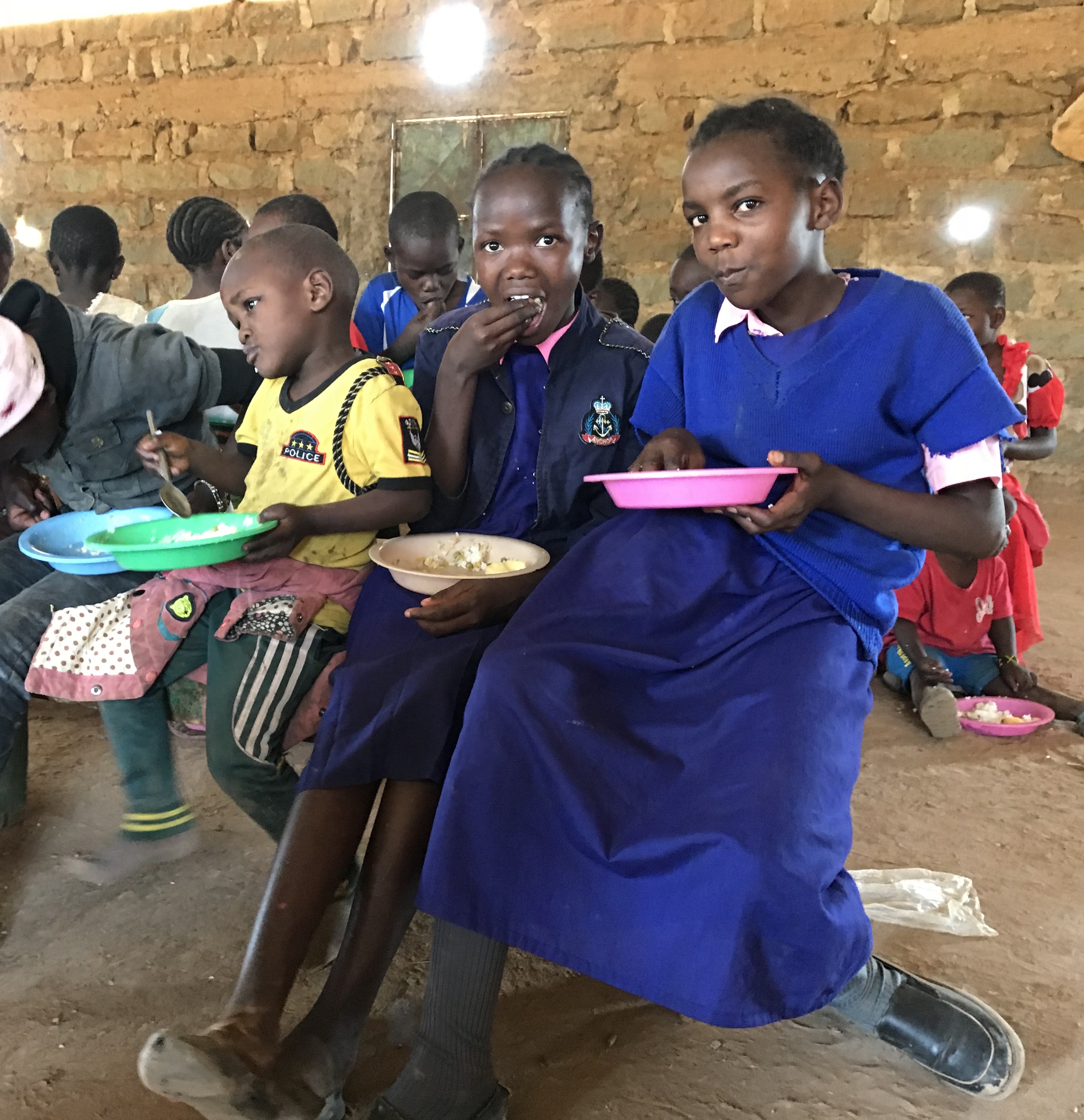
Meet Pastor Boniface and see the feeding program in action
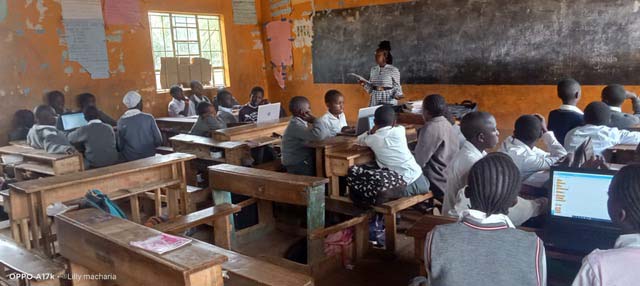
OLPC computers at Thika
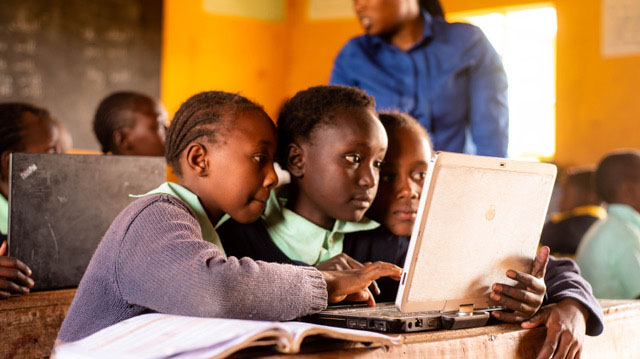
Truancy was also a problem. Students would simply walk away from school after the morning meal. The local Government school, the Garissa Road School, is an underfunded school on the edge of the slum at the end of a government funding pipeline which has much of the funding siphoned off on the way to the great needs in Thika. The OLPC computers became a lure and an incentive for children to attend school.
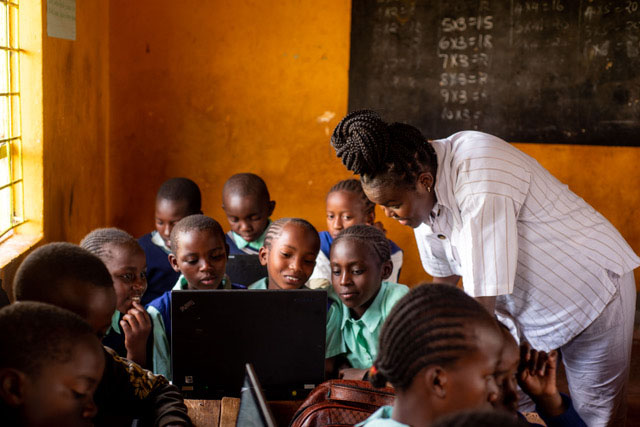
Using volunteers from the churches who were given training by KCEF, computer education was introduced at the seventh grade at the Garissa Road School. Since no other schools in the area had computers the school gained a pride that was unknown before.
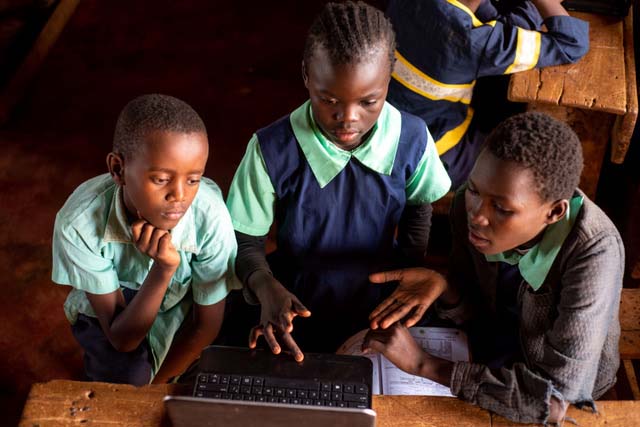
Students came to school and stayed because of a new sense of purpose. Attendance numbers have improved dramatically. Since its inception in February of 2014 the computer program has now expanded to an additional two public schools and three private schools which also serve the community.
Through EFAC (Education for All Children) and KCEF’s sponsorship, the highest achieving students living in the poorest conditions in Thika have scholarship opportunities through university.